Open-ended play allows kiddos to explore, imagine, and create. A grocery store is no exception! We talk through ten ways to add realism and experiences to pretend grocery store play using household items:
Empty Food Containers: Use cereal boxes, pasta jars, or milk cartons as “items for sale.” Label them with price tags made from paper. You (and kiddo) can even draw or tape pictures of the actual products on the containers to help with identification.
Old Food Containers: Repurpose containers from snacks or takeout. These can act as cans, boxes, or bottles on the ‘store shelves,’ and kiddo can pretend to shop for different foods.
Paper Bags or Totes: Use paper bags or fabric totes as shopping bags for your child to carry their “purchases.” These can be filled with the containers you’ve set up as products.
Toy Cash Register: If you have a toy cash register, great! If not, you can make your own with a small box, some buttons drawn on paper, and a piece of tape to serve as a “scanner.” Your child can ring up purchases and even pretend to make change.
Old Magazines or Catalogs: Cut out pictures of food from old magazines or catalogs. These can be used as “sale items” for your child to choose from or “advertisements” for special deals around the store.
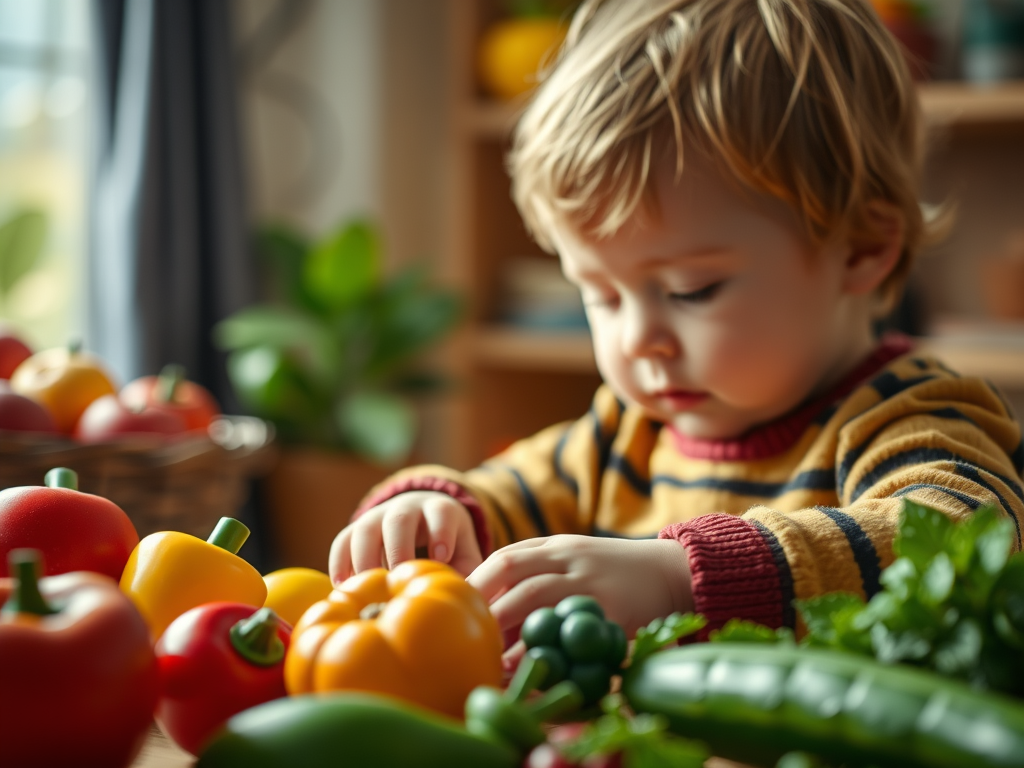
Fruit and Veggies: If you have toy fruits and vegetables, wonderful! If not, real fruits like apples, bananas, or potatoes can also be used for shopping. If you feel like getting crafty, you and kiddo could spend an afternoon painting rocks to serve as fruit and veggies, just make sure the rocks are a larger size to avoid a choking hazard! Cutting item shapes out of felt is another great way to create reusable food items.
Play Money: If you have toy coins and bills, use them to teach your child how to “pay” for items. If you don’t, create simple play money by drawing bills and cutting out coin shapes from cardboard or construction paper.
Chalkboard or Paper for Price Tags: Write out prices on a small chalkboard or piece of paper, and attach them to your containers or “products.” You can also set up a small menu or display board to show daily specials or sales.
Shopping Cart or Basket: A small basket or even a laundry basket can serve as the cart. Your child can “fill it up” with their pretend groceries.
Storefront Sign: Create a simple sign for the grocery store by drawing one on a piece of paper or cardboard. It can say something like “Welcome to [Kiddo]’s Grocery Store!” or “Fresh Produce!” to make the store feel even more real.
These ideas help create an open-ended environment that encourages imaginative play, and helps kiddo learn about money and work on basic math skills. Plus, it’s a great way to repurpose everyday items in fun, new ways!
 playonkiddo.org
Leave a comment